The Cabinet Test
Most people who have taken a supplement every day for a year cannot tell you whether it did anything.
That is not a discipline problem. It is a design problem, and it starts with how the bottle was sold to you.
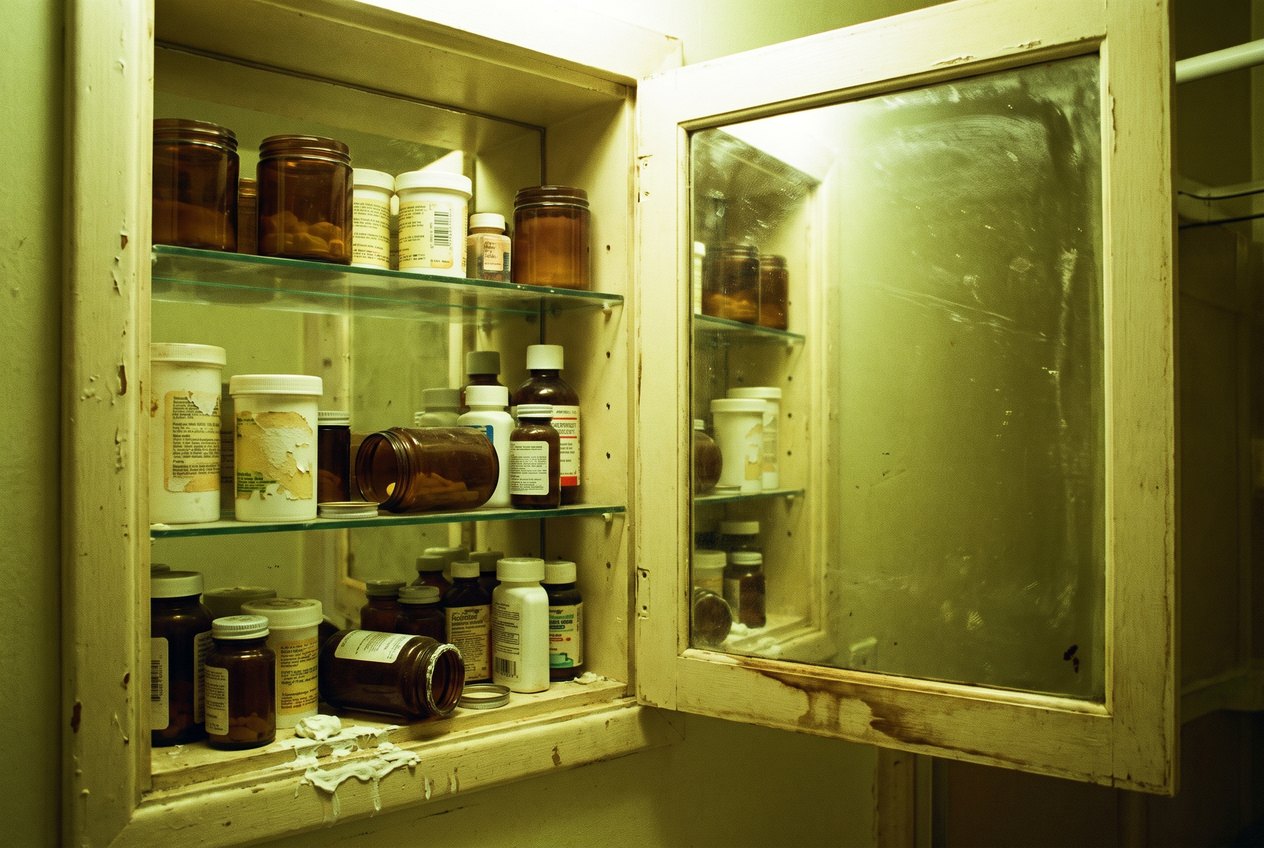
There is a test you can run in about forty seconds, and almost nothing on that shelf passes it.
If you are like most people who have ever tried to fix their sleep, their energy or their digestion from a bottle, the count is somewhere between eight and twenty.
Some are empty. Two or three are the same thing bought twice, because you forgot you already had it. At least one expired during a year you would rather not think about.
Every one of those bottles was bought by somebody who wanted exactly what you wanted. And every one of them failed in the same specific way.
The failure is almost never the ingredient
This is the part that surprises people. In most cases the compound in the bottle does roughly what the research says it does. Magnesium really does participate in hundreds of enzymatic reactions. L-theanine really does show up in EEG studies. The ingredient is usually not the liar in the room.
What fails is everything around it. The form it arrived in. The dose relative to the dose that was actually studied. Whether it was taken with food. And whether anybody ever told you how long it takes before the thing is supposed to work at all.
That is the cabinet test. Not "did it work", but "was it ever set up so that I could tell". Almost nothing on that shelf was.
Three things that decide it before you swallow anything
The form. The same mineral can arrive as an oxide, a citrate or a chelate, and the difference in how much you absorb is not small. The word on the front of the bottle rarely tells you which one you bought. The panel on the back always does.
The dose against the study. A label can name an ingredient with real evidence behind it and then include a tenth of the amount that evidence used. This is legal, common, and invisible unless you go and read the study yourself.
The window. Some things work in forty minutes. Some need six to eight weeks of consistent use before there is anything to notice. Nobody selling the second kind has a commercial reason to lead with that, because the honest version of the sentence sounds like a delay.
- 01 The specific form of the active, not just its name. Bisglycinate and oxide are not the same product.
- 02 The amount per serving, and how many servings a day that quietly assumes.
- 03 How many days the bottle actually lasts at that serving size.
- 04 Whether it is meant to be taken with food, and whether you have been.
- 05 What it says about how long before you should expect anything.
Why the shelf keeps filling up anyway
Because the alternative is admitting you cannot tell. And because the next bottle is always cheaper than the appointment.
There is nothing stupid about that. Buying a thirty-four dollar jar is a reasonable response to feeling tired for eight months when the other option involves a waiting room. The problem is that the way these things get sold makes it nearly impossible to run the experiment properly, so you end up with eleven half-finished trials and no result from any of them.
If you are going to try one more, make it the last one you have to guess about. Pick the form deliberately. Read the amount. Give it the window the research gave it. Then decide.
One bottle, with the awkward parts printed on the front
Cabinet Standard was put together by people who got tired of having this conversation. The form of every active is named on the front label, the dose matches the dose in the studies it cites, and the box states plainly that it takes six to eight weeks before you should judge it. That last line costs them sales. They print it anyway.
See what is in itInvented product, built for a demonstration page. This button does not go anywhere.
About this page. This is a concept pre-sell page produced by Bad Flows to demonstrate how a cold-traffic advertorial is structured. "The Evening Review", "Marguerite Ellery" and "Cabinet Standard" are invented, as are the reader comments in the sidebar. Nothing here is medical advice and no claim on this page should be read as one. If you have been tired for eight months, the appointment really is the better option.